
Raw Milk vs. Pasteurized Milk: What We Lost When We Started Heating Milk
Raw milk was humanity’s only option for millennia. Then came pasteurization — a heat treatment that improved safety and shelf life, but also changed milk from a living traditional food into a standardized industrial product.
This guide explores what pasteurization solved, what it may reduce, why fermentation matters, and why Oolapa Maziwa Mala is built around raw grass-grazed milk, wild cultures, charcoal fermentation, and time.
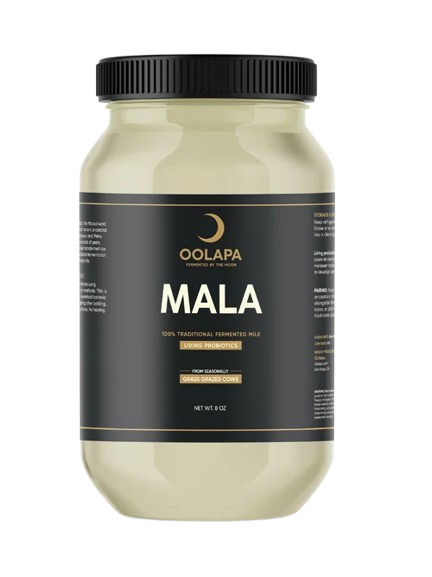
Oolapa Maziwa Mala
A bold, living fermented milk inspired by traditional African maziwa mala — made with raw grass-grazed milk, charcoal fermentation, wild cultures, and extended fermentation.
Was Pasteurization a Breakthrough, a Trade-Off, or Both?
Pasteurization helped solve a real public-health problem: contaminated milk from crowded, unsanitary industrial dairies. But heating milk also changes the food. The real question is not whether safety matters — it does. The question is what was lost when all milk became heat-treated by default.
Raw Milk
- Unheated milk from cows, goats, sheep, camels, or other animals.
- Contains native bacteria, enzymes, proteins, fats, and immune factors.
- Requires clean sourcing, testing, cold storage, and careful handling.
Pasteurized Milk
- Heated to kill harmful bacteria and extend shelf life.
- Made for large-scale distribution and retail consistency.
- Safer in a conventional food system, but less biologically alive.
Fermented Raw Milk
- Traditional cultures used fermentation to preserve raw milk.
- Long fermentation lowers pH and supports beneficial microbes.
- Oolapa Maziwa Mala brings this ancestral approach into a modern product.
What Is Raw Milk?
Raw milk is milk that has not been pasteurized or heated for commercial sterilization. It comes straight from the animal and is consumed fresh or transformed into traditional foods such as kefir, cultured cream, raw cheese, butter, and maziwa mala.
Traditional food cultures did not think of raw milk as an industrial commodity. They treated it as a living food — one that needed clean animals, careful handling, and often fermentation to preserve it.
Raw milk is biologically active.
It contains naturally occurring microbes, enzymes, proteins, fats, antibodies, vitamins, and minerals in a complex food matrix. That living quality is exactly what industrial dairy processing tries to standardize, stabilize, and control.
Pasteurized milk, by contrast, is intentionally made biologically quiet. Heat treatment reduces microbial activity and makes milk easier to ship, store, and sell at scale. That is useful for safety and distribution — but it is also a major change from the milk humans consumed for thousands of years.
Why Pasteurization Became Standard
Pasteurization was not invented because traditional raw milk had never worked. It became widespread because urban industrial dairies created a real contamination crisis.
Louis Pasteur
Pasteurization was first developed to reduce spoilage and harmful microbes in wine and beer.
Milk Processing
The same heat-treatment idea was applied to milk as cities grew and food systems industrialized.
The Real Problem
Cows were often kept in crowded, unsanitary conditions and produced contaminated milk.
The Trade-Off
Pasteurization improved safety at scale, but also normalized highly processed dairy.
The forgotten context
The problem was not simply “milk before heat.” The problem was filthy production. Clean pasture-based raw milk and contaminated industrial raw milk are not the same thing. Pasteurization became the solution that allowed mass distribution to continue without requiring every farm to meet the highest traditional standards.
What Pasteurization Changes in Milk
Heating milk does not only target harmful microbes. It can also reduce or alter heat-sensitive components that make milk a living, digestible, traditional food.
Enzymes Are Inactivated
Lactase, lipase, phosphatase, and other enzymes help break down lactose, fats, and minerals. Heat treatment reduces this natural enzyme activity.
Beneficial Bacteria Are Killed
Pasteurization does not distinguish between “good” and “bad” bacteria. It reduces microbial life broadly, including beneficial species.
Proteins Are Denatured
Milk proteins have complex structures. Heat can unfold those structures, which may change texture, digestibility, and how the body responds.
Vitamins Can Be Reduced
Some heat-sensitive vitamins, especially certain B vitamins and vitamin C, may be reduced during heat processing.
Immune Factors Are Damaged
Raw milk contains compounds such as lactoferrin, lysozyme, and immunoglobulins. These delicate factors are sensitive to heat.
Fat Structure Is Altered
Commercial milk is often homogenized after pasteurization, breaking fat globules into smaller particles instead of letting cream rise naturally.
Want the traditional fermented milk experience?
Oolapa Maziwa Mala is made for people who want more than ordinary dairy: raw grass-grazed milk, wild cultures, charcoal fermentation, and a bold probiotic tang.
The Digestion Difference
Many people notice that fermented dairy feels easier on digestion than ordinary milk. The reason is simple: fermentation gives bacteria time to break down lactose, transform proteins, and create a more complex living food.
Raw milk contains more of its original enzymes and microbial life. Pasteurized milk shifts the digestive burden to the person drinking it. Fermentation shifts the burden again — this time toward beneficial microbes that begin the work before the food reaches your gut.
Why fermented raw milk stands apart
Fermentation is not just preservation. It is transformation. In a traditional product such as maziwa mala, microbes consume sugars, produce acids, create tang, and build a living ecosystem that plain pasteurized milk cannot develop on its own.
Oolapa Maziwa Mala
For customers who want a stronger, more ancestral fermented dairy experience than yogurt or standard kefir.
The Raw Milk Safety Question
A responsible raw-milk article must say both things clearly: raw milk is traditional and nutrient-rich, and raw milk can carry harmful pathogens if sourced or handled poorly.
Safety note before choosing raw milk
Public health agencies warn that raw milk can contain pathogens such as E. coli, Salmonella, Listeria, Campylobacter, Brucella, Cryptosporidium, and others. Pregnant people, infants, young children, older adults, and people with weakened immune systems are commonly advised to avoid raw milk. For current safety guidance, see the CDC raw milk safety page and the FDA raw milk safety page.
Risk Is Real
- Raw milk can be contaminated.
- Testing and sanitation matter.
- Cold storage is essential.
- High-risk groups should follow medical guidance.
Source Matters
- Pasture-based animals are preferred.
- Clean milking environments matter.
- Regular pathogen testing matters.
- Transparent farms build trust.
Fermentation Helps
- Fermentation lowers pH.
- Beneficial bacteria compete for space.
- Long fermentation improves digestibility.
- Traditional cultures used fermentation for preservation.
Raw Milk + Fermentation Is Where Tradition Gets Powerful
Traditional cultures around the world did not simply drink milk fresh. They fermented it into kefir, dahi, leben, airag, raw cheeses, and African maziwa mala. Fermentation made milk more durable, more digestible, more flavorful, and more alive.
Traditional Cultures
Pastoral people from East Africa to Mongolia transformed milk through time, vessels, temperature, smoke, charcoal, and microbial inheritance.
Wild Microbial Diversity
Raw milk fermentation starts with native bacteria and yeasts rather than only a small set of commercial starter cultures.
Time Creates Depth
Extended fermentation creates deeper tang, greater transformation, and a more complex food than short industrial fermentation.
Why pasteurized milk cannot create the same traditional product
Pasteurized milk starts from a biologically reduced base. To ferment it, producers must add standardized starter cultures. That can create yogurt or kefir, but it cannot fully recreate the wild microbial complexity of traditional fermented raw milk.
Upgrade From Ordinary Dairy to Living Fermentation
Oolapa Maziwa Mala is made for people who want traditional fermented milk with raw grass-grazed milk, charcoal fermentation, wild cultures, and a bold, probiotic-rich taste.
Grass-Fed + Raw + Fermented: The Strongest Combination
If you are seeking the most traditional milk experience, three factors matter: what the animal eats, whether the milk is kept raw, and whether the milk is fermented slowly.
Grass-Grazed Milk
- Connected to pasture and animal health.
- Traditionally valued for richer flavor and cream.
- Supports the ancestral dairy model.
Raw Milk Foundation
- Preserves original enzymes and microbial life.
- Maintains native protein and fat structure.
- Creates a stronger base for wild fermentation.
Extended Fermentation
- Encourages microbial diversity.
- Breaks down lactose and proteins over time.
- Creates bold tang and living complexity.
The Oolapa Commitment
Traditional maziwa mala depends on raw milk. The beneficial bacteria in raw grass-grazed milk are the foundation of wild fermentation. Without them, you cannot create the same bacterial diversity, digestive transformation, and bold traditional character.
At Oolapa, the goal is not to imitate ordinary yogurt. It is to preserve an African fermented milk tradition through raw milk, charcoal fermentation, wild cultures, and time measured in weeks and months.
Raw milk + extended fermentation creates:
- Maximum probiotic diversity and microbial complexity.
- A more digestible dairy experience as lactose and proteins transform.
- A nutrient-dense living food with traditional depth.
- A bold, tangy taste that reminds your gut what real fermentation feels like.
This is not just about preserving tradition. It is about preserving the kind of food relationship people had before dairy became anonymous, industrial, and standardized.
Ready to Taste Real Fermentation?
Try Oolapa Maziwa Mala — raw grass-grazed milk transformed by wild cultures, charcoal fermentation, and traditional time.
The Bottom Line: Raw Milk vs Pasteurized Milk
Pasteurization helped make milk safer for mass distribution. But it also changed what milk is: less alive, less enzymatically active, less microbial, and more industrial.
What We Gained
- Improved safety for large-scale distribution.
- Longer shelf life and easier storage.
- Standardized retail dairy.
- Protection against many pathogens in poor-quality milk systems.
What We Lost
- Living bacteria and wild microbial diversity.
- Natural enzyme activity.
- Some delicate proteins, vitamins, and immune factors.
- A direct relationship with farms, animals, and traditional food craft.
The Traditional Path Forward
- Start with clean, high-quality raw milk.
- Use slow fermentation to transform and preserve it.
- Choose living fermented foods such as maziwa mala.
- Respect safety, sourcing, and your own health needs.
Make Maziwa Mala Your Daily Fermentation Ritual
Choose a traditional fermented milk with raw grass-grazed milk, wild cultures, charcoal fermentation, and probiotic depth.
Frequently Asked Questions
Quick answers for readers comparing raw milk, pasteurized milk, and traditional fermented milk.
What is the main difference between raw milk and pasteurized milk?
Raw milk has not been heat-treated for pasteurization. Pasteurized milk has been heated to reduce harmful bacteria and improve safety for mass distribution.
Does pasteurization kill beneficial bacteria?
Yes. Pasteurization reduces microbial life broadly, including harmful bacteria and beneficial bacteria. That is why pasteurized milk needs added starter cultures if it is later fermented.
Why is fermented raw milk different from regular milk?
Fermentation allows bacteria and yeasts to transform milk by breaking down sugars, producing acids, changing texture, and developing a more complex living food.
Is raw milk safe?
Raw milk can carry harmful pathogens if contaminated. Safety depends on sourcing, testing, sanitation, cold storage, and individual risk. Public health agencies advise high-risk groups to avoid raw milk.
What is maziwa mala?
Maziwa mala is a traditional African fermented milk. Oolapa Maziwa Mala is made with raw grass-grazed milk, wild cultures, charcoal fermentation, and extended fermentation.
Where can I buy Oolapa Maziwa Mala?
You can buy it through the official Oolapa product page linked throughout this article.
Note: This article is for educational and product discovery purposes only. Raw milk laws, safety guidance, and product availability vary by location and may change. Always check the official Oolapa product page for current details, and consult a qualified health professional if you are pregnant, immunocompromised, elderly, buying for children, or unsure whether raw or fermented dairy is appropriate for you.