
From Millions to Billions: Why Bacterial Count Actually Matters
Pick up any yogurt container and you may see claims like “live and active cultures” or even “millions of probiotics.”
Sounds impressive — until you understand the scale of your gut microbiome. When your gut contains trillions of bacteria, millions can be a drop in the ocean.
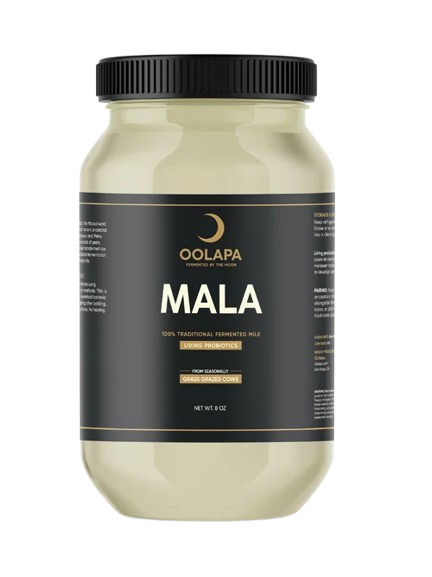
Oolapa Maziwa Mala
A traditional African fermented milk made with raw grass-grazed milk, charcoal fermentation, wild cultures, and time measured in weeks and months.
The Scale of Your Gut Microbiome
Your gut contains approximately 38 trillion bacteria. These bacteria belong to thousands of different species and support important functions linked to digestion, immunity, vitamin production, gut balance, and overall wellness.
This ecosystem is massive, complex, and deeply established. That is why probiotic count matters. If you are trying to influence an ecosystem measured in trillions, the difference between millions, billions, and tens of billions becomes important.
The Ocean Analogy
Imagine your gut microbiome as the Pacific Ocean. Yogurt with millions of bacteria is like pouring a glass of water into the ocean. Kefir with billions is like pouring in a bathtub. Traditional Maziwa Mala with tens of billions is more like pouring in a swimming pool.
Why Count Matters
- Your gut ecosystem is measured in trillions.
- Many bacteria do not survive stomach acid.
- Low-count probiotics may create a weak signal.
- Daily high-count fermented foods can build meaningful pressure.
- Diversity plus count is stronger than count alone.
Millions vs. Billions vs. Tens of Billions
The difference is not just bigger numbers on a label. It changes how much living bacteria may actually reach your gut.
Commercial Yogurt
Many yogurt products are discussed in the range of millions of CFU per serving. In a gut ecosystem of trillions, that can be a very small probiotic signal.
Kefir
Kefir often moves into the billions, with a broader mix of bacteria and beneficial yeasts. This makes it a stronger probiotic option than standard yogurt.
Maziwa Mala
Traditional extended fermentation can create tens of billions of bacteria, higher diversity, stronger resilience, and a more meaningful daily probiotic presence.
But it is not only about the count.
Bacterial count matters, but so does diversity. Yogurt may have a low count and limited strains. Kefir improves both count and diversity. Maziwa Mala goes further with wild fermentation, hardy bacteria, beneficial yeasts, and extended transformation.
The Survival Problem
Not every bacterium that enters your mouth reaches your gut. Stomach acid is designed to kill microbes, which is why resilience matters.
Commercial Yogurt
If a serving starts with 10 million bacteria and only a portion survives stomach acid, the amount reaching the gut may be much smaller.
Kefir
Kefir’s diverse strains and beneficial yeasts can improve survival, helping more living bacteria pass through the stomach environment.
Maziwa Mala
Wild-fermented bacteria are positioned as hardier because they develop through extended fermentation, helping deliver a stronger living-food effect.
The Real Gap
After survival is considered, high-count traditional fermented foods can deliver dramatically more live bacteria than low-count yogurt.
The Recolonization Question
Most probiotic bacteria you consume are transient. They pass through your system rather than permanently colonizing it.
But they do not need to permanently colonize to be useful. As they pass through, they may help shift the gut environment, produce beneficial compounds, compete with unwanted microbes, signal the immune system, and support beneficial bacteria already present in your gut.
Critical mass matters.
A few million transient bacteria may not send a strong enough signal. Tens of billions, consumed consistently, can create a more noticeable environmental push inside the gut.
The Candida Problem
When someone is dealing with yeast imbalance concerns, bacterial count and diversity become even more important. The goal is not a tiny probiotic signal — it is consistent microbial competition from diverse, high-count fermented foods.
Kefir and traditional fermented foods stand out because they can provide high bacterial counts, beneficial yeasts, microbial diversity, and daily consistency.
Ready for a Bigger Probiotic Step?
Oolapa Maziwa Mala is made for people who want more than basic yogurt — more fermentation depth, more traditional value, and more probiotic richness.
The Daily Dose Reality
Consistency changes the equation. Fermented foods are most powerful when they become a daily habit.
Daily Yogurt
- Lower bacterial count per serving.
- Usually limited strain diversity.
- Often sweetened or flavored.
- May maintain only a small transient population.
Daily Kefir
- Higher count than standard yogurt.
- More diverse bacteria and yeasts.
- Drinkable and easy to use daily.
- Strong upgrade for gut-health routines.
Daily Maziwa Mala
- Tens of billions of bacteria.
- Wild microbial diversity.
- Extended fermentation depth.
- Strongest traditional living-food option.
That is when things start to shift.
With consistent high-count intake, the gut environment can receive repeated signals: beneficial bacteria are supported, unwanted microbes face more competition, and the ecosystem has more opportunity to move in a better direction.
The Supplement Trap
Probiotic supplements can contain billions or even trillions of CFU, and they can be useful in some cases. But they are not the same as living fermented food.
Survival
Freeze-dried capsules vary widely in survival and quality.
Diversity
Many supplements contain fewer strains than wild fermentation.
Food Matrix
Fermented foods come with proteins, acids, and compounds that support delivery.
Supplements have their place for travel, convenience, or specific wellness routines. But for daily life, living fermented foods offer something broader: bacteria, yeasts, enzymes, acids, nutrients, and a real food matrix.
What Your Probiotic Should Offer
- High bacterial count: billions to tens of billions.
- High diversity: dozens to hundreds of strains.
- High survival: hardy bacteria that reach the gut.
- Consistency: daily intake over weeks and months.
- Living-food value beyond a capsule.
Your Gut Deserves Billions, Not Millions.
Discover Oolapa Maziwa Mala — traditional African fermented milk made for deeper fermentation, greater microbial diversity, and a more serious probiotic routine.
Frequently Asked Questions
Quick answers about probiotic bacterial count, CFU, and traditional fermented milk.
Why does bacterial count matter in probiotics?
Bacterial count matters because your gut microbiome is extremely large. A low-count product may add only a tiny signal, while billions or tens of billions of live cultures can create a more meaningful probiotic presence when consumed consistently.
What does CFU mean?
CFU stands for Colony Forming Units. It is a common way to describe how many live bacteria are present in a probiotic food or supplement.
Are billions of probiotics better than millions?
Generally, higher counts can be more impactful, especially when paired with strong microbial diversity, good survival through stomach acid, and regular daily consumption.
How does Maziwa Mala compare with yogurt for bacterial count?
Commercial yogurt is often discussed in the millions of CFU per serving, while traditional Maziwa Mala is positioned as a higher-count fermented food with tens of billions of bacteria from extended fermentation.
Is bacterial diversity as important as bacterial count?
Yes. Count matters, but diversity also matters. A fermented food with many types of bacteria and beneficial yeasts may support a broader gut-health effect than a low-diversity product.
Where can I buy Oolapa Maziwa Mala?
You can buy Oolapa Maziwa Mala online through the official Oolapa product page.
Note: This article is written for educational and product discovery purposes. It is not medical advice. Always check the official Oolapa product page for current product details, availability, storage guidance, and ordering information.