
What “Live and Active Cultures” Really Means
That “live and active cultures” seal on your yogurt sounds reassuring. So do labels like “contains probiotics” and “billions of CFU.”
But those claims can hide weak standards, limited strains, shelf-life die-off, and very little practical probiotic value. Here is what yogurt companies often do not explain — and what to choose when you want living, diverse, traditional fermentation.
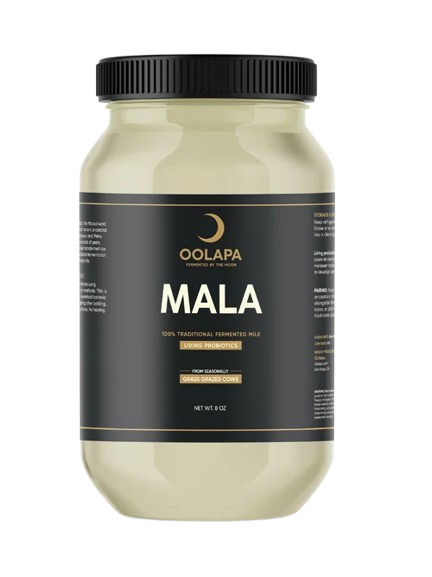
Oolapa Maziwa Mala
A traditional African fermented milk made with raw grass-grazed milk, wild cultures, charcoal fermentation, and living probiotic richness.
You Are in the Dairy Aisle. The Labels Look Healthy.
One yogurt brand has a seal that says “Live and Active Cultures.” Another says “Contains Probiotics.” A third boasts “Billions of CFU.”
You feel good about your choice. You are buying something healthy, right?
Here is the problem: those labels often tell you less than you think. A product may contain bacteria at one point in production, but that does not automatically mean it gives you meaningful probiotic diversity, strong survival through digestion, or the same living complexity as traditional fermented foods.
The key lesson
Do not judge fermented food by the front label alone. Look at strains, fermentation time, freshness, heat treatment, ingredient quality, and microbial diversity.
What “Live and Active Cultures” Actually Means
The phrase sounds powerful, but the basic standard is narrow. It focuses on minimum bacteria counts and traditional yogurt cultures — not overall probiotic quality.
Minimum CFU Count
Yogurt must contain at least 100 million CFU per gram at the time of manufacture. For frozen yogurt, the minimum is lower.
Only Two Cultures Required
The standard centers on Lactobacillus bulgaricus and Streptococcus thermophilus, the classic yogurt-making bacteria.
Not a Diversity Guarantee
A seal does not mean the yogurt contains broad microbial diversity, beneficial yeasts, wild cultures, or long fermentation.
That is the bar. Not the whole story.
A 170g serving may sound impressive on paper, but what matters is what remains alive, what strains are present, and whether those microbes add real diversity.
The Five Big Loopholes Yogurt Labels Do Not Explain
The phrase “live and active cultures” can be technically accurate while still leaving out the information a shopper actually needs.
“At Time of Manufacture”
The count only needs to meet the standard when the yogurt is made. By the time it reaches your fridge, live culture levels may have dropped dramatically.
- Warehouse time
- Shipping time
- Store shelf time
- Fridge storage time
Only Two Strains Required
The two classic yogurt bacteria create texture and tang, but they are not the same as a diverse, living fermented ecosystem.
- L. bulgaricus
- S. thermophilus
- Limited strain variety
- Limited microbial complexity
No Required Beneficial Add-Ons
Some brands add researched strains, but many do not. A simple two-culture yogurt can look similar on the front label to a more advanced probiotic yogurt.
- L. acidophilus may be optional
- Bifidobacterium may be optional
- Specific strain lists may be missing
Possible Heat Treatment
Some products may be heat-treated after culturing to improve shelf stability. That can reduce or kill live bacteria, even if fermentation happened earlier.
- Long shelf life
- Very stable texture
- Less natural separation
- Possible post-culture heating
No Diversity Requirement
Your gut is an ecosystem. A food with two strains is not the same as kefir, raw sauerkraut, or traditional Maziwa Mala made through wild fermentation.
- No beneficial yeast requirement
- No wild culture requirement
- No multi-species guarantee
Try Oolapa Maziwa Mala
Go beyond basic yogurt labels with traditional fermentation, wild cultures, and a richer living food experience.
What “Contains Probiotics” Means
Some yogurt labels skip the official-looking seal and simply say “contains probiotics.” That phrase can sound even better, but it may be less specific.
A label may not tell you how many live organisms remain when you eat it, which exact strains are present, whether those strains are well studied, or whether the product was heated after culturing.
Marketing is not the same as transparency.
The most useful fermented food labels would show specific strains, real culture counts at the end of shelf life, fermentation time, heat-treatment status, and whether there are added sugars or stabilizers.
Ask Better Questions
- Which strains are included?
- How many strains are present?
- When was the CFU count measured?
- Was the product heated after fermentation?
- How long was it fermented?
- Does it contain added sugar or stabilizers?
The “Billions of CFU” Shell Game
Big numbers look impressive, but CFU count alone does not prove a fermented food is better. Diversity, survival, freshness, and fermentation quality matter too.
Billions of What?
Are those billions mostly the two basic yogurt cultures, or does the product include a broad mix of beneficial strains?
Billions When?
Were the numbers measured at manufacture, at the end of shelf life, or when you actually consume the yogurt?
Billions That Survive?
Do the strains survive acidity and digestion well enough to reach where they are meant to go?
How to Actually Evaluate Yogurt
Since front labels can be vague, use these practical checks before assuming a yogurt is a strong probiotic food.
1. Check the Ingredient List
- Look for milk and cultures first.
- Prefer specific strain names.
- Avoid heavy added sugar.
- Watch for thickeners and stabilizers.
2. Look for Fermentation Time
- “24-hour fermentation” is a good sign.
- “Slowly fermented” may indicate care.
- Longer fermentation can improve digestibility.
- Short fermentation is often more commercial.
3. Notice the Texture
- Some whey separation can be normal.
- Perfectly smooth texture may indicate stabilizers.
- Real fermented dairy often grows tangier over time.
- Overly stable texture can be a clue.
4. Choose Better Producers
- Small-batch makers may ferment longer.
- Local producers may rotate fresher stock.
- Grass-fed or organic milk can be a quality sign.
- Transparent labels are always better.
5. Compare Beyond Yogurt
- Kefir may provide broader culture diversity.
- Raw sauerkraut offers dairy-free microbes.
- Traditional Maziwa Mala brings ancestral fermentation.
- Your gut benefits from variety.
6. Avoid the Sugar Trap
- Many flavored yogurts are dessert-like.
- Fruit blends often add sweeteners.
- Choose plain when possible.
- Add your own fruit if needed.
For Serious Fermentation, Look Beyond Basic Yogurt
If your goal is deeper fermented-food diversity, compare yogurt with kefir, raw sauerkraut, and traditional Maziwa Mala.
Kefir
A drinkable fermented milk traditionally made with kefir grains, often valued for a broader range of cultures than standard yogurt.
- Drinkable texture
- Usually tangy
- Often more diverse than yogurt
- Good everyday upgrade
Oolapa Maziwa Mala
A traditional African fermented milk made with raw grass-grazed milk, charcoal fermentation, wild cultures, and time-honored methods.
- Wild fermentation
- Raw grass-grazed milk
- Traditional African food culture
- Bold, tangy, living character
Raw Sauerkraut
A vegetable-based fermented food option for people who want dairy-free diversity from raw, unpasteurized fermentation.
- Dairy-free option
- Must be raw/unpasteurized
- Vegetable-based
- Adds microbial variety
The Bottom Line
The “Live and Active Cultures” seal is not useless, but it is not enough. It tells you that yogurt once met a basic culture standard. It does not tell you how much is alive when you eat it, whether the strains are diverse, whether the product was heat-treated, or whether the food has the living complexity your gut may benefit from.
If you want better fermented foods, do not rely only on seals and front-label claims. Read the ingredient list. Look for specific strains. Choose longer-fermented products. Prioritize diversity over giant CFU numbers. And consider traditional fermented foods beyond commercial yogurt.
Your gut deserves more than minimum-standard yogurt.
It deserves living, diverse, traditional fermentation — the kind Oolapa Maziwa Mala was created to preserve.
Ready to Try Maziwa Mala?
Discover a bold, traditional fermented milk made with raw grass-grazed milk, wild cultures, and charcoal fermentation.
Stop Chasing Yogurt Label Hype.
Choose Oolapa Maziwa Mala — traditional African fermented milk with wild cultures, raw grass-grazed milk, and a deeper living-food story than basic commercial yogurt.
Frequently Asked Questions
Quick answers about yogurt labels, live cultures, CFU counts, and better fermented-food choices.
What does “live and active cultures” mean on yogurt?
It generally means the yogurt contained live yogurt cultures that met a minimum standard at the time of manufacture. It does not guarantee broad strain diversity or the same count when you eat it.
Does “live and active cultures” mean a yogurt is a strong probiotic?
Not always. A yogurt may contain live cultures but still rely mainly on the two basic yogurt bacteria, with limited strain diversity compared with kefir or traditional wild fermented foods.
Why does “at time of manufacture” matter?
Live culture counts can decline during storage, shipping, shelf time, and refrigeration. A high count at production does not always equal the same count at consumption.
What should I look for in a better yogurt?
Choose plain yogurt with a short ingredient list, specific strain names, low added sugar, no unnecessary stabilizers, and ideally a longer fermentation time.
Is kefir better than yogurt for probiotic diversity?
Kefir is often more diverse than standard yogurt because it is traditionally made with kefir grains containing bacteria and beneficial yeasts.
Why choose Oolapa Maziwa Mala?
Oolapa Maziwa Mala is a traditional African fermented milk made with raw grass-grazed milk, wild cultures, charcoal fermentation, and a living fermented-food tradition.
Note: This article is for educational and product discovery purposes only. It is not medical advice. Always check the official Oolapa product page for current ingredients, storage guidance, availability, and ordering information.