
Fermented by Moon Cycles: How Traditional African Fermentation Works
Traditional maziwa mala fermentation takes weeks to months—not hours. This is why moon cycles, not clocks, create a deeper living fermented milk experience.
Oolapa means moon in Maa, the Maasai language. We chose this name because traditional fermentation was not measured in hours or days. It was measured in moon cycles.
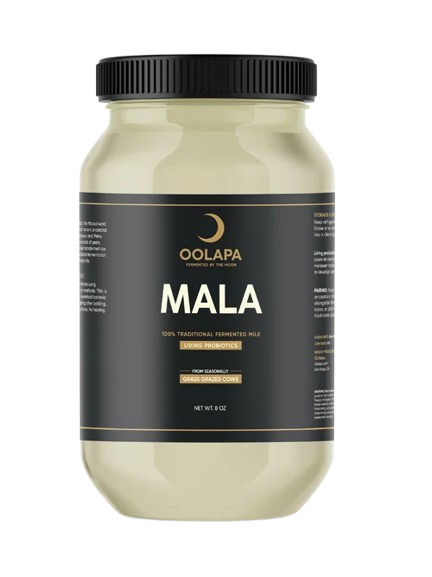
Slow Fermented. Living. Ancestral.
Oolapa Maziwa Mala is traditional African fermented milk made with raw grass-grazed milk, time, and living probiotics.
This Isn’t Poetic Exaggeration. It’s Practical Ancestral Knowledge.
Before modern clocks controlled food production, traditional African fermentation followed a slower rhythm: raw milk, observation, time, and the moon.
Walk into any food science lab and they will tell you fermentation is about control: precise temperatures, specific starter cultures, exact timing, and consistent results batch after batch.
This produces predictable products. But predictable is not always better. Traditional African fermentation works on a completely different principle: trust time, not temperature.
The Problem with Modern Fermentation
Modern fermentation is designed for speed, uniformity, and shelf control. Yogurt and kefir can be excellent foods, but they are usually made within tightly managed systems.
- Precise temperatures such as 98.6°F for yogurt or 68–78°F for kefir.
- Specific starter cultures such as L. bulgaricus and S. thermophilus.
- Exact timing such as 8 hours for yogurt or 24 hours for kefir.
- Consistent results designed to taste the same every time.
Traditional fermentation asks a different question.
Instead of asking, “How fast can we finish this?” it asks, “How much depth can time create?”
The Wisdom of Waiting
Traditional African maziwa mala fermentation does not depend on thermometers, timers, or commercial cultures.
No Thermometers
Room temperature—wherever that happens to be—is enough. Warmer weather may speed fermentation. Cooler weather slows it. The milk adapts.
No Starter Cultures
Raw milk already contains diverse beneficial bacteria. Charcoal fermentation creates the right environment for them to thrive.
No Timers
You taste, smell, and observe. When it is ready, it is ready. This might be one week, two weeks, or two months.
Moon cycles as a measurement
Before clocks and calendars dominated daily life, people tracked time by the moon. A full moon cycle of about 28 days became a natural unit of measurement: “This batch has been fermenting for one moon.” “That one for two moons.”
What Happens During Extended Fermentation?
When milk ferments for weeks instead of hours, the transformation becomes deeper, more complex, and more alive.
Initial Transformation
The milk thickens. Lactic acid bacteria begin multiplying rapidly. pH drops. The tang develops. Most commercial fermentation stops here.
Deepening Complexity
Bacterial diversity increases. Different strains emerge at different stages. Flavors become more developed. The product is fully alive now.
Maximum Development
The bacterial ecosystem becomes mature. Flavor turns bold, tangy, and complex. This is what our ancestors knew: transformation takes time.
Why Raw Milk Does Not Rot the Same Way
People often ask: “If you leave milk at room temperature for weeks, will it not spoil?”
Pasteurized milk can spoil quickly when exposed to room temperature because heating kills both harmful and beneficial bacteria. If contaminating bacteria enter later, they can multiply freely.
Raw milk is different in traditional fermentation. It contains naturally occurring bacteria that help create an acidic environment. This is protective fermentation—the same broad principle behind sauerkraut, kimchi, and sourdough.
The milk does not simply sit. It transforms.
Extended fermentation lowers pH and changes the environment inside the milk. In traditional maziwa mala, the goal is not spoilage. The goal is controlled natural transformation through time, acidity, and beneficial bacterial activity.
The Role of Charcoal
Activated charcoal from hardwood is not just a filter. In traditional fermentation, it is an active participant.
- It purifies by absorbing impurities during fermentation.
- It creates surface area where beneficial bacteria can colonize and develop.
- It connects to tradition across many African fermentation practices, from milk to traditional brews.
Once fermentation reaches the desired stage, the charcoal is removed. What remains is pure fermented milk with no charcoal residue.
Living Products vs. Finished Products
Modern food culture treats fermentation as a process with an endpoint. Traditional culture treats fermentation as ongoing.
Oolapa Maziwa Mala
- A living fermented milk experience
- Fermentation continues developing over time
- Flavor can evolve from mild tang to bold complexity
- Made with raw grass-grazed milk
- No commercial cultures or shortcuts
Typical Commercial Fermented Dairy
- Often designed to be finished quickly
- Usually pasteurized and standardized
- Often uses selected starter cultures
- Flavor is designed for consistency
- Fermentation is commonly stopped or slowed early
Refrigerate maziwa mala and fermentation slows dramatically. The flavor mellows and stabilizes. Keep it at room temperature and fermentation continues—the flavor intensifies and evolves.
This makes every jar a living experience. The maziwa mala you drink today may taste slightly different from the same jar next week.
Why This Method Matters
Extended wild fermentation creates something commercial products cannot easily replicate: microbial diversity, depth of flavor, and a stronger connection to ancestral food knowledge.
Bacterial Diversity
Commercial yogurt usually uses a narrow group of defined cultures. Kefir may contain more strains. Traditional maziwa mala can develop a broader and more complex bacterial ecosystem over time.
Probiotic Density
More time gives beneficial bacteria more opportunity to multiply and mature. By the time fermentation reaches several weeks, the product has developed far beyond a quick dairy ferment.
Flavor Depth
Quick fermentation creates a simple tang. Extended fermentation creates layers of flavor: bright notes, deep notes, and complex notes.
Bring the Moon Cycle to Your Table
Oolapa is made for people who want ancestral fermented milk with real character.
- Traditional African Maziwa Mala
- Slow fermentation by time, not shortcuts
- Bold tangy taste
- Small batch availability
How to Enjoy Oolapa Maziwa Mala
Enjoy it as a traditional daily ritual, a tangy drink, or a living food pairing with simple ingredients.
Drink Plain
Experience the pure tang and creamy texture of traditional fermented milk.
With Raw Honey
Balance the sour notes with natural sweetness for a smooth ritual.
As a Ritual
Make it part of a slow morning, evening reset, or mindful food routine.
With Food
Pair with fruit, dates, fermented bread, or simple traditional meals.
Reclaiming Time
In a culture obsessed with speed and efficiency, traditional fermentation is radical.
It says some things cannot be rushed. Some things get better with time. Some things require patience, not productivity.
Our ancestors knew this. They measured fermentation in moon cycles because they understood: transformation takes time.
At Oolapa, we are reclaiming that wisdom—one batch, one moon cycle, one jar at a time.