
Charcoal Fermentation: The Ancient African Method Behind Oolapa Maziwa Mala
When we tell people we use charcoal fermentation, the first question is usually: “Like… the same stuff you grill with?”
Not quite. Charcoal fermentation is a traditional African method that helps purify and transform raw milk into living, tangy, probiotic-rich Maziwa Mala.
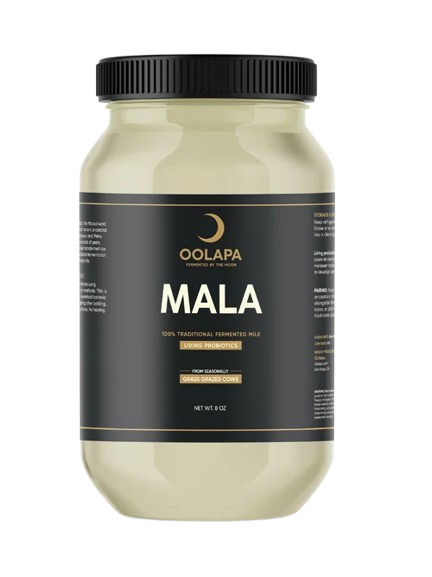
Oolapa Maziwa Mala
A living African fermented milk made with raw grass-grazed milk, food-grade hardwood charcoal, wild fermentation, and time.
What Is Charcoal Fermentation?
Charcoal fermentation is a traditional method where activated hardwood charcoal becomes part of the fermentation environment.
In modern food culture, charcoal is often misunderstood as something used only for grilling, filtering, or trendy black-colored foods. In traditional African fermented milk, charcoal has a deeper purpose.
During fermentation, food-grade activated hardwood charcoal helps create a cleaner environment while offering a porous surface where beneficial bacteria can colonize. This supports the slow transformation of raw milk into Maziwa Mala.
Charcoal is not just a filter.
In traditional Maziwa Mala, charcoal is an active part of the fermentation process itself. It supports purification, microbial colonization, probiotic diversity, and flavor refinement.
What Is Activated Charcoal?
Activated charcoal is made by heating hardwood at high temperatures, creating a porous material with massive surface area.
500–3000 m²
One gram of activated charcoal can have a surface area of roughly 500 to 3000 square meters.
Purifier + Habitat
Its surface can absorb impurities while giving beneficial bacteria places to colonize.
Absorbs Impurities
Activated charcoal is valued for its ability to absorb unwanted compounds during fermentation.
Supports Bacteria
Its porous surface gives beneficial bacteria more spaces to colonize and thrive.
Purifies Milk
During Maziwa Mala fermentation, charcoal contributes to a cleaner, more refined transformation.
The Traditional African Method
For thousands of years, African communities have used charcoal from specific hardwoods during milk fermentation. This was not random. The wood species mattered, the preparation mattered, and the timing mattered.
Maasai traditions have used charcoal from acacia or certain indigenous trees. Kalenjin mursik traditions use charcoal from specific woods, often tied to ceremonial and cultural meaning. Across East Africa, regional variations use local hardwoods based on inherited knowledge.
Different trees can impart subtle flavors and have different purification properties. This knowledge — which trees to use, how to prepare the charcoal, and when to add it — has been passed down through generations.
How Charcoal Works in Maziwa Mala Fermentation
Unlike yogurt or kefir fermentation, traditional Maziwa Mala uses charcoal as an active part of the transformation process.
Active Fermentation Begins
- Raw milk is combined with activated charcoal.
- Charcoal absorbs potential impurities.
- Beneficial bacteria begin colonizing the charcoal surface.
- Millions of tiny spaces become bacterial ecosystems.
Slow Transformation
- The charcoal continues supporting purification.
- Different bacterial strains emerge at different stages.
- Large surface area supports probiotic diversity.
- pH drops as lactic acid bacteria multiply.
Charcoal Is Removed
- The charcoal is removed completely.
- What remains is pure fermented milk.
- No charcoal taste.
- No charcoal residue — just living probiotics.
The final product is fermented milk, not charcoal milk.
The charcoal does its work during fermentation and is removed before serving. What remains is tangy, living, traditional African fermented milk.
The Science Behind Charcoal Fermentation
Modern language is beginning to explain what traditional knowledge has practiced for generations.
Absorption Properties
Activated charcoal can absorb bacteria, toxins, and chemicals, helping create a cleaner fermentation environment.
Microbial Colonization
The porous structure gives beneficial bacteria an ideal habitat to grow and multiply.
pH Support
Charcoal may help buffer pH during fermentation while allowing beneficial bacteria to thrive.
Flavor Development
Charcoal can absorb certain compounds, resulting in cleaner, more refined fermented flavors.
Charcoal Fermentation vs Commercial Fermentation
The difference is not just equipment. It is a completely different relationship with time, microbes, and milk.
Commercial Yogurt or Kefir
- Often made in stainless steel tanks or plastic containers.
- Commercial starter cultures are added.
- Fermentation happens in a temperature-controlled environment.
- The process is usually stopped within 4 to 48 hours.
- The goal is consistency, speed, and standardization.
Traditional Charcoal Fermentation
- Natural vessels such as calabash, clay, or glass may be used.
- Wild cultures from raw milk guide the process.
- Charcoal acts as an active fermentation agent.
- Fermentation happens slowly at room temperature.
- Time is measured in weeks or months, not hours.
Charcoal is integral to the process.
It is not simply a container or a filter. In traditional Maziwa Mala, charcoal helps shape the microbial environment, flavor, and final character of the fermented milk.
Is Charcoal Fermentation Safe?
Safety questions are natural, especially for people discovering this tradition for the first time. Oolapa uses food-grade activated hardwood charcoal and removes the charcoal after fermentation is complete.
Is it safe to consume charcoal?
The final product is not meant to contain charcoal. The charcoal is used during fermentation and then removed completely. What remains is fermented milk.
Does it taste like charcoal?
No. The charcoal is removed, and any compounds that would create a charcoal taste are left behind with the charcoal itself. The final taste is pure, tangy, fermented milk.
How does Oolapa source charcoal?
Oolapa uses activated hardwood charcoal from suppliers who specialize in food-grade charcoal. While traditional African hardwoods may not always be available, the method follows the same principles: natural hardwood, proper activation, and food-safe use.
Why Oolapa Is Committed to This Method
In a world of shortcuts and optimizations, it would be easy to ferment milk faster using commercial cultures and modern equipment. It would be more efficient, more predictable, and easier to scale.
But something irreplaceable would be lost: living bacterial diversity, probiotic density, flavor complexity, and cultural authenticity.
Charcoal fermentation has sustained communities for generations. It is a practice worth preserving — not as a museum piece, but as a living tradition that can still nourish people today.
Ready to Taste Real Maziwa Mala?
Experience traditional African fermented milk made with raw grass-grazed milk, food-grade charcoal fermentation, wild cultures, and patience.
The Bigger Picture: A Different Relationship With Food
Charcoal fermentation represents more than a technique. It represents a different way of thinking about food.
Modern Food Production Says
- Control every variable.
- Eliminate uncertainty.
- Produce identical results every time.
- Make everything faster and more predictable.
Traditional Fermentation Says
- Work with nature.
- Trust the process.
- Allow variation and adaptation.
- Give food the time it needs to become alive.
Oolapa chooses patience.
The best things in life — friendship, art, love, and fermentation — cannot be rushed, controlled, or standardized. They require time, patience, and a little bit of faith.
Discover Maziwa Mala Made With Traditional Charcoal Fermentation
Oolapa Maziwa Mala preserves a traditional African fermentation method using raw grass-grazed milk, food-grade hardwood charcoal, wild cultures, living probiotics, and time.
Frequently Asked Questions About Charcoal Fermentation
Quick answers for readers discovering traditional charcoal-fermented Maziwa Mala for the first time.
What is charcoal fermentation?
Charcoal fermentation is a traditional method where food-grade activated hardwood charcoal is used during fermentation to support purification, microbial colonization, and flavor development.
Is charcoal fermentation used in Maziwa Mala?
Yes. In traditional Maziwa Mala, charcoal can be used as an active fermentation agent while raw milk slowly transforms into tangy fermented milk.
Does Oolapa Maziwa Mala contain charcoal?
No. The charcoal is used during fermentation and removed completely before serving. The final product is fermented milk.
Does charcoal fermentation taste smoky?
No. The charcoal is removed after fermentation. The final flavor is tangy, sour, creamy, and clean, not smoky or charcoal-like.
How is charcoal fermentation different from yogurt?
Yogurt usually uses selected commercial cultures and controlled fermentation. Charcoal-fermented Maziwa Mala uses raw milk, wild cultures, charcoal, and slower traditional transformation.
Where can I buy Oolapa Maziwa Mala?
You can buy Oolapa Maziwa Mala online through the official Oolapa website and product page.